if trees could talk - what do they tell you about our park?
Did you know that you can discover the history of Cornwall Park by looking at our trees?
Love of nature
Sir John Logan Campbell, the park's founder, had a profound love for natural landscapes and trees. Before the park's establishment, he farmed and planned to reside on what he called the One Tree Hill Estate. From the mid-to-late 1800s, he planted macrocarpa pine trees to create shelter belts for grazing animals, experimented with olive oil production by planting olive trees, and created a grand driveway lined with trees that led to the plateau where he envisioned his home would be. You can still see remnants of these pre-park plantings, along the Campbell Road paddocks, in the Olive Grove, and along Grand Avenue, or the pedestrian pathway that leads past the cricket field to Huia Lodge – a testament to Sir John's enduring legacy.
Sir John donated One Tree Hill Estate to the people of Aotearoa New Zealand in 1901, renaming it Cornwall Park and it opened officially in 1903.
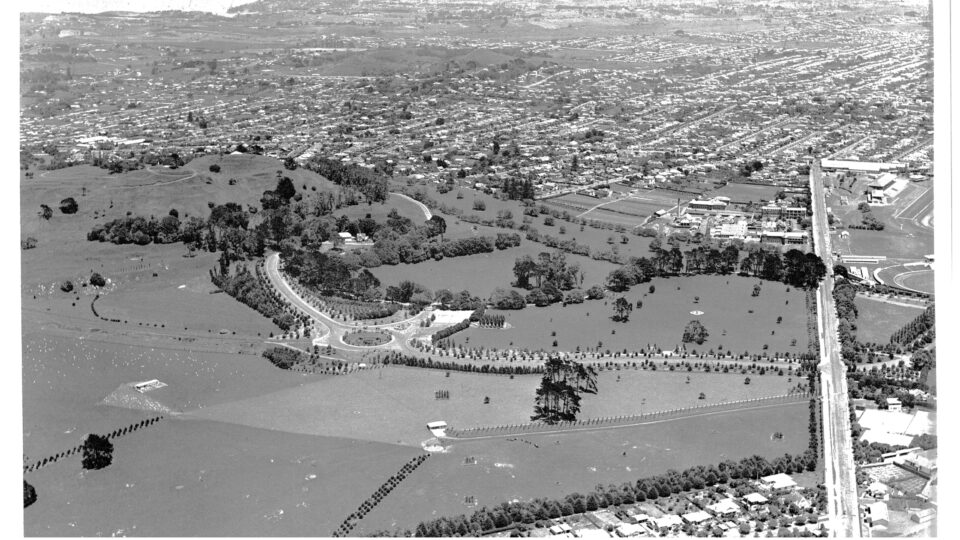
Sir John’s vision
Visitors to the park would have admired the trees Sir John planted and the remnants of native rock forests on the slopes of Maungakiekie. His vision for the park was a place where people could walk in nature and enjoy the landscape surrounded by canopies of trees.
Planting on the avenues and drives you would recognise today began in the 1920s, starting with Pūriri Drive, followed by Pōhutukawa Drive, and then Twin Oak Drive in the 1930s. The iconic curved pōhutukawas were trained to grow over the road by planting Norfolk Island Pines in an adjacent row. The majestic oaks of Twin Oak Drive were grown from acorns sourced from the park and raised in our onsite nursery. This gap between opening and canopy creation is due to the death duties the park had to pay after Sir John's passing in 1912. Planting trees takes a lot of time, money, and mahi (work), so the staff waited patiently, growing trees from seed to be planted in the future. The death duties were paid by the 1920s, and the avenues and groves of the park were planted, inspired by Sir John's design.

War and beyond
WW11 disrupted planting when much of the park was closed to the public. A large portion of it was requisitioned as land to house a hospital for the United States Army. When the army no longer required the hospital, it was taken over by the Auckland District Hospital Board, and Cornwall Hospital was founded. It continued to serve the community until the mid-1970s. This area of the park, reaching from Green Lane West along the Maungakiekie Road Boundary to Twin Oak Drive, was re-planted progressively as the hospital was demolished in stages from 1960 to the mid-1990s.
The Gingko Grove was planted in memory of this hospital. Many of the trees in this area were selected because they are fast-growing, enabling the landscape to return to parkland more quickly.
In the 1960s, the park's trustees decided to honour Sir John's vision of a 'ngāhere' or forest in the park by creating a Native Arboretum surrounding the great lawn below the Memorial Steps. These trees not only provide a beautiful landscape but also serve as a valuable educational resource for local children, offering them the opportunity to observe native species without having to venture into the forests. It's like a library of trees, enriching the learning experience for all visitors.
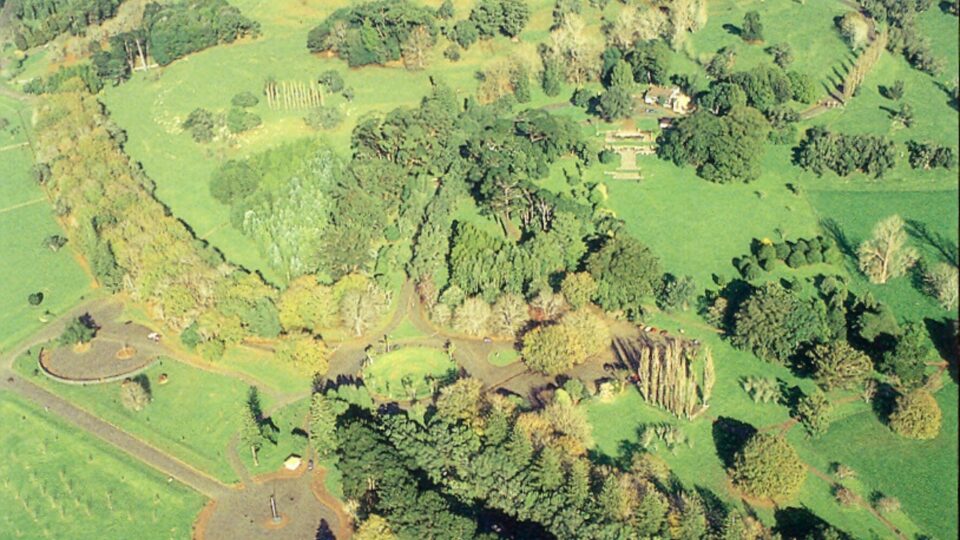
Protecting our Kauri
Planted in the 1930s and 1940s in recognition of Sir John's love of kKauri and his entrepreneurial history as the first European exporter of kauri gum and timber, our kauri are ecosystem indicators. They were roped off in two stages to prevent the spread of kauri dieback. Beyond the rope and beneath the trees, a natural forest is flourishing below. You can see the birds of the park 'reforesting the grove' as they perch in the trees above and fertilise the soil below with seeds and droppings. Nothing beneath has been planted by humans.
Today, our arborists lovingly refer to the park as a 'rest home and kindergarten for trees'. They diligently care for and prolong the lives of the older trees and plant hundreds of new ones each year. Every tree planted is carefully selected to support and enhance the park's ecosystem, reflecting our commitment to conservation and the park's role as caretakers of this land.
Discover more about Cornwall Park's landscape heritage on one of our guided walks, where knowledgeable guides will take you on a journey through the park's history and environment. You can also learn more by visiting Huia Lodge Discovery Hub, a dedicated space where you can explore interactive exhibits and learn about the park's history, plantings, and ecological significance.
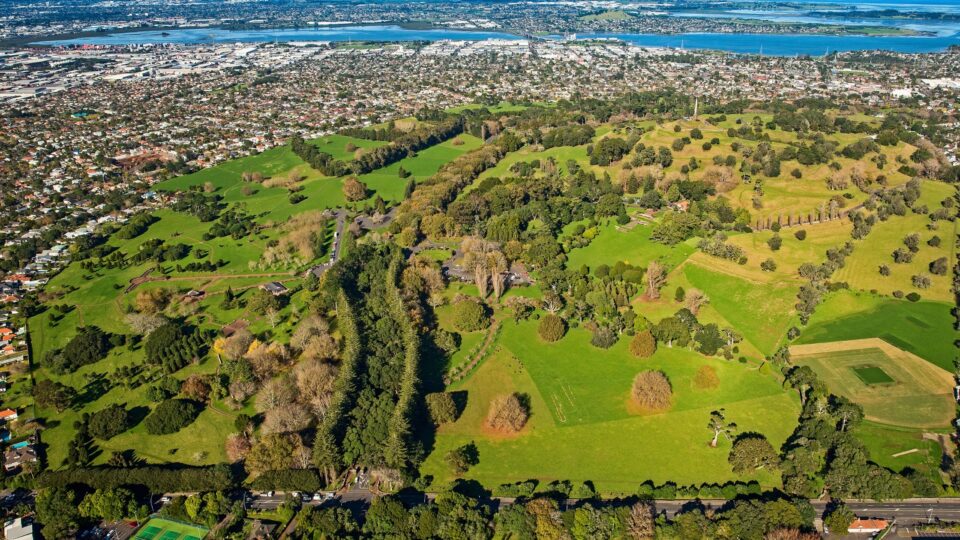
Did you know…
- Cornwall Park is self funded – it’s not part of Auckland City and runs at no cost to tax or rate payers.
- We have around 9,000 trees at the park
- We use best practise techniques for our managing and maintaining our trees.
- We use Light Detection and Ranging (LiDAR) to create 3D images of our trees to assess their health.
- We are planning for how we adapt to climate change.
