funky knowledge about ginkgo trees
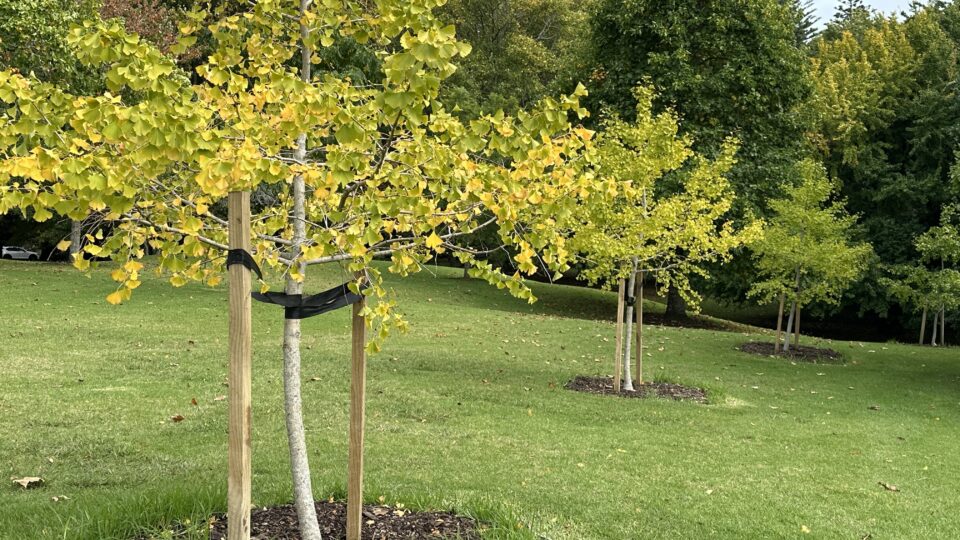
Have you ever wandered through Cornwall Park in autumn and come across that grove of magnificent, golden-leaved trees? From a distance, their radiant beauty can be almost breath-taking, the leaves glowing warmly in the sunlight. But as you draw closer, something unexpected happens—a strange, funky odour begins to creep into the air, quietly making its way to your nose. You might find yourself instinctively frowning, glancing around, and wondering, what on earth is that smell?
Older than dinosaurs
Gingko (Ginkgo biloba) are one of the world's oldest living tree species, being the sole survivor of an ancient group of trees that existed before dinosaurs roamed the Earth – between 245 and 66 million years ago. Because of this, ginkgo trees are often referred to as 'living fossils', with 200-million-year-old fossils being found that are very similar to the trees of today. Their fan-shaped leaf structure is completely unique, and they are the only living connection between ferns and conifers (such as pines and kauri).
Not all ginkgo trees are smelly.
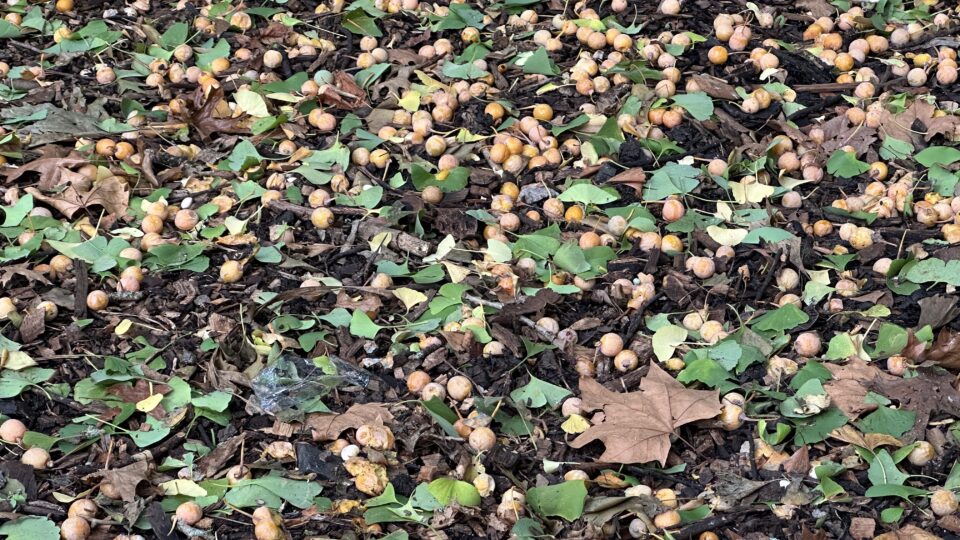
Only the female ginkgo trees that produce the seeds are smelly. The male ginkgo trees, on the other hand, do not produce seeds, hence they are usually the preferred trees for urban landscaping.
The chemicals behind the smell
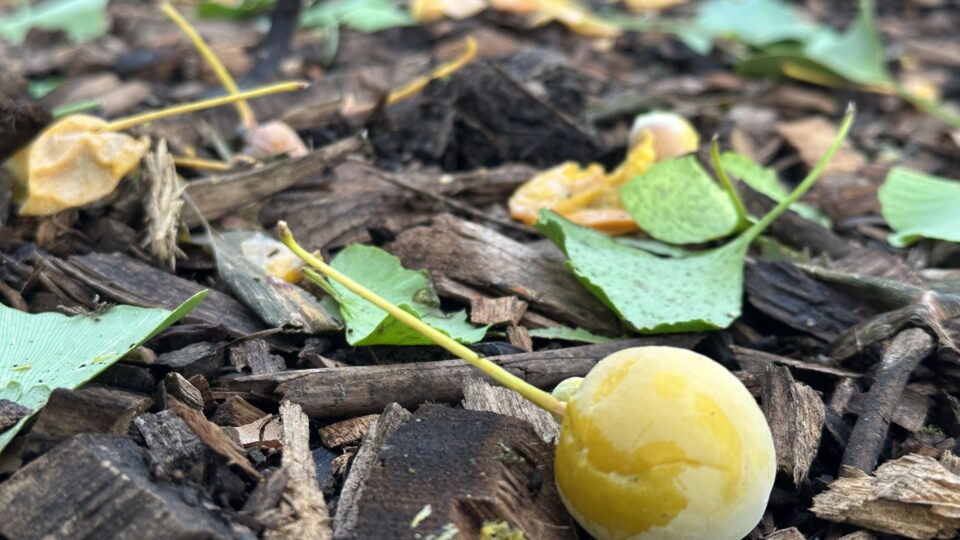
The unpleasant smell commonly linked to ginkgo seeds usually emerges only after the seeds have been on the ground for a few days and started to decompose. This odour is caused by two volatile compounds in the sarcotesta (the fleshy yellow seed coat): butanoic acid and hexanoic acid. Butanoic acid is the same chemical the gives the smell in vomit, while hexanoic acid is commonly found in dairy products like cheese. To say the combination of these two is unpleasant is quite an understatement!
But why?
We do not know for sure. Modern ecological and evolutionary work suggests the smell likely attracts scavenging animals that disperse the seeds. Natural history studies document carnivores such as raccoon dogs and masked palm civets eating the stinky fleshy coating and spreading the intact kernel in their droppings. A recent review argues the odour functions as a carrion mimic, drawing in scavengers adapted to handle potentially pathogenic food and turning them into effective seed dispersers. Other scientists have speculated that high levels of butyric‑like acids could also deter some organisms or inhibit fungi, but this remains hypothetical.
Our gingko trees
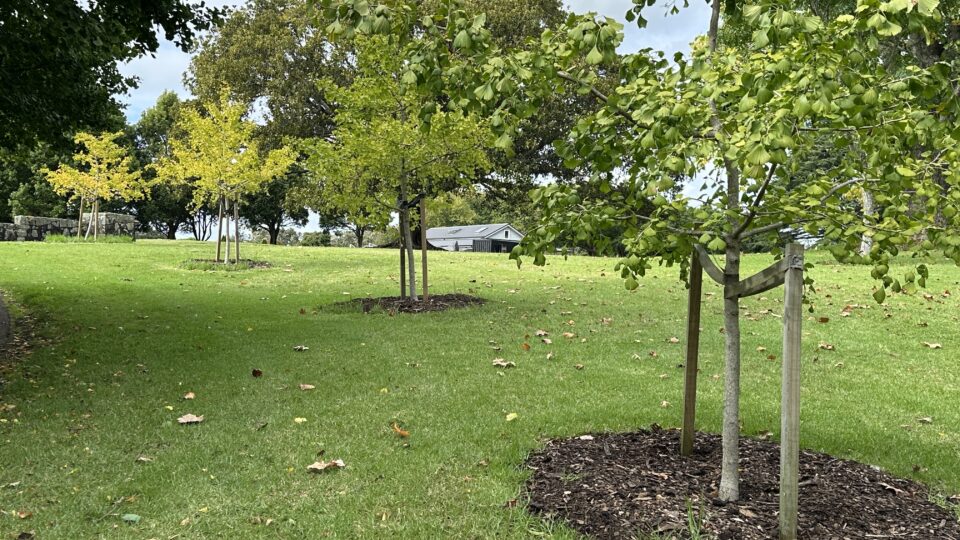
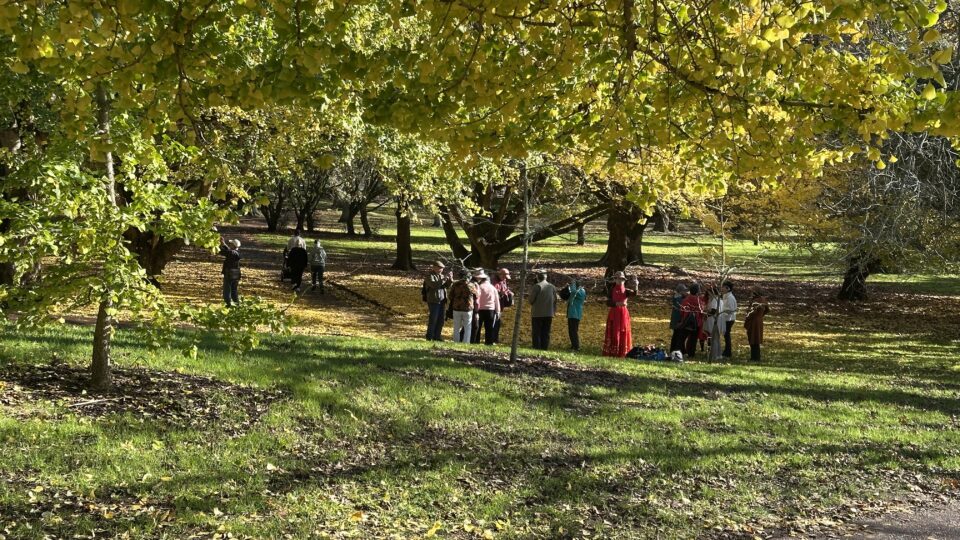
We have a grove of magnificent ginkgo trees along the eastern side of Pohutukawa Drive. Last year, our arborist team planted six Ginkgo Biloba Autumn Gold – Maidenhair to extend the ginkgo grove up to the Rangitoto steps. Unlike the female tree, The Autumn Gold is a male tree and does not have any smelly fruit, yet they are extremely hardy and still have an amazing colour. The team recently applied a thick layer of in-house heavily rotted mulch underneath the grove of Ginkgo to add nutrients to the soil, help with moisture retention, reduce competitive weeds and soil compaction. The other beautiful benefit of applying this rich dark mulch layer is the amazing contrast with the golden leaves that fall during autumn 🍂. Our lead arborist Thomas said: “It really is a joy to see people enjoying the trees and dressing up and taking photos during autumn, the yellow leaves slowly rain down for weeks.”
Please remember…
As a gentle reminder, Cornwall Park does not allow foraging so please don't remove the ginkgo fruits or kernels. Why do we have a no foraging policy? Cornwall Park is a unique ecosystem, some of the ecosystem has been created through the efforts of our team and some has occurred naturally with the help of birds and insects. The eco-system of the park is always in delicate balance and we don't want to disrupt it by removing fruits and seeds that are nourishing the soil, insect life and birds.
